
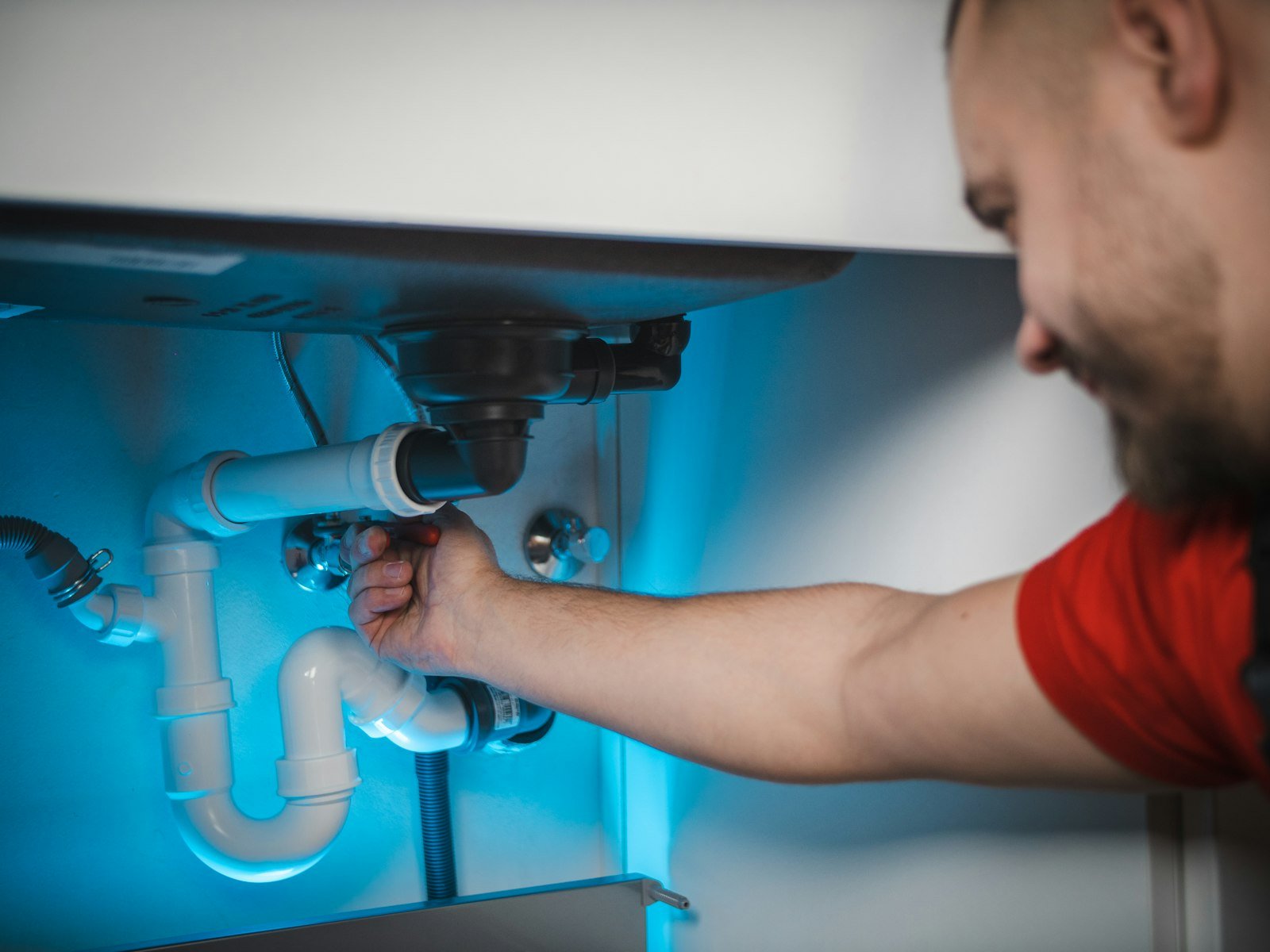
It’s 2:14 a.m. A homeowner is standing in an inch of water in the kitchen because the supply line to the fridge let go. They’ve already called one restoration company and got a voicemail. The next one that answers, and sounds like it knows what it’s doing, gets the job. For a restoration company that job is often a sizeable insurance claim, so how your phone is answered at 2 a.m. matters more than almost anything else in the business.
This guide covers what a water, fire and mold restoration company needs from an answering service: what to ask on the first call, who gets woken up and how, what not to say about insurance, and the options and costs. We make Ansdale, an AI receptionist for home service businesses, so we’re not neutral. Restoration is a trade where a live person can be worth paying for, and we’ll say where.
Why is restoration different on the phone?
- The emergencies are real and they’re at night. Burst pipes, failed water heaters, sewage backups, storm water and fire don’t keep office hours.
- The caller is upset. Their floors are ruined and they don’t know what happens next. Tone matters.
- Speed decides who gets the job. People in that state call down a list until somebody answers.
- There’s a third party. Insurance carriers and adjusters, and for some companies third-party administrator programs with their own response expectations.
- Commercial clients expect a process. Property managers want a reference number and a time, not a promise to call back.
What should be asked on the first call after a water loss?
Safety first, then the facts your on-call tech needs to roll the right truck. A good intake script, whoever follows it:
- Is anyone in danger? Water near outlets or a panel, a sagging ceiling, a gas smell. If there’s a gas smell, leave the house and call the gas company or 911. If water is near electrics, stay out of that area.
- Is the water still running? If yes, do they know where the main shut-off is? Talking someone through finding it is the most useful thing you can do on that call.
- Where is it coming from? Supply line, appliance, water heater, toilet, roof, groundwater, sewer backup.
- How clean is it? Clean supply water, a washing machine or dishwasher, or toilet and sewage. The industry’s IICRC water damage standard sorts water into three categories by contamination, and the answer changes the equipment and the crew.
- How long and how far? When it started, which rooms and floors, finished basement or not, carpet or hardwood.
- Who is calling? Owner, tenant or property manager. Who can sign the work authorization?
- Insurance. The carrier’s name and the claim number if they’ve already filed. Nothing more on the first call.
- Address, access and pets. Gate codes, parking, a dog that needs shutting away.
- Photos. Send a text asking for a few pictures while the tech is on the way.
Fire calls need different questions: has the fire department cleared the building, does it need boarding up or a tarp, is there soot or smoke damage in other rooms. Mold calls are rarely emergencies; book an inspection for the next available day.
Who gets woken up, and how?
Write the escalation list down and give it to whoever answers. Who’s on call this week, who’s the backup, and when does it go to the owner? Do they get a phone call or a text? How long between tries? An answering service that leaves one voicemail on your on-call tech’s phone and moves on is worse than useless at 2 a.m.
Equally, decide what doesn’t wake anyone. A mold question, a quote for a basement that flooded last month or an adjuster asking for an update can all wait for the morning. Our guide to after-hours emergency calls for a one-person shop walks through writing these rules if you’re the only one on call.
Should the answering service talk about insurance or price?
No. “Will my insurance cover this?” is the most common question and the one nobody on your phones should answer. Coverage depends on the policy and the cause, and a wrong answer at 2 a.m. becomes a dispute later. The right response is to explain what happens next: someone will come out, take moisture readings and photos, and document everything for the claim. The same goes for price. Restoration pricing depends on what the tech finds.
Live operator or AI for restoration calls?
Here’s our honest view. A trained person is better with a frightened caller, and restoration has more frightened callers than most trades. If your calls are high value and you can afford it, a live service with a solid intake script and a reliable escalation chain is a good choice.
But a live operator who can’t reach your on-call tech, or who puts the caller on hold during a storm because every operator is busy, loses the job anyway. An AI receptionist answers every call at once, follows the same script every time and can ring your on-call phone the moment the caller says “water is still coming in.” Plenty of companies use both: AI for the first answer and the intake, with urgent calls ringing straight through to a person.
Restoration calls also run long, which matters on per-minute plans. Prices we checked on 19 October 2026:
- Ruby (live): $250 a month for 50 receptionist minutes up to $1,725 for 500, billed in 60-second increments.
- Smith.ai live receptionists: $300 a month for 30 calls, then $11.50 a call.
- AnswerConnect (live): no published prices; we covered what AnswerConnect says it costs and what to ask for in a quote.
- Ansdale (AI, ours): $49, $99 or $199 a month for 100, 250 or 500 AI call minutes. Emergencies are flagged under rules you set and escalated to your number; everything else books into your calendar.
Whichever you choose, check how call recording works, because several states require everyone on the call to consent. Our page on call recording consent explains the rules. For more on overnight coverage in general, see our after-hours answering service page, and if you also do plumbing, our plumbing emergency call triage page has a similar script.
Questions people ask
Why does a restoration company need a 24/7 answering service?
Water, fire and storm losses happen at any hour, and people in the middle of one call down a list until someone answers. If your phone goes to voicemail at night, the job usually goes to the next company that picks up.
What questions should be asked when a water damage call comes in?
Whether anyone is in danger, whether the water is still running and where the shut-off is, the source and how clean the water is, how long and how far it has spread, who is calling and can authorize work, the insurance carrier and claim number, the address and access, and photos by text.
Can an answering service dispatch my on-call technician?
It can reach them. Give it a written escalation list with who is on call, the backup, how to contact each and how long to wait between tries. Test it with a late-night call before you rely on it.
How much does an answering service for a restoration company cost?
On prices checked on 19 October 2026, live services start at $250 a month for 50 minutes (Ruby) or $300 for 30 calls (Smith.ai live receptionists), and long restoration calls use minutes quickly. AI receptionists cost less; Ansdale, which is ours, is $49 to $199 a month.
Leave a Reply